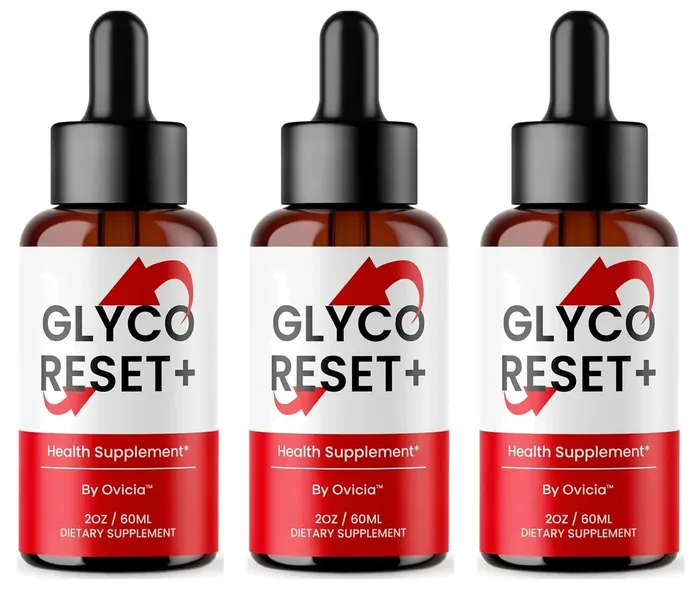
Research
Apple Cider Vinegar and Blood Sugar: What the Research Really Shows
The best summary is a 2025 meta-analysis of 7 trials in 463 adults with type 2 diabetes. Taking 13.75 to 30 mL a day for 4 to 12 weeks went with fasting blood sugar about 22 mg/dL lower (moderate certainty). No trial tested Glyco Reset, and a whole 60 mL bottle covers only 2 to 4 days of those doses.
Written by the Glyco Reset editorial teamUpdated · 9 min read

The question
Why do people study apple cider vinegar for blood sugar?
Apple cider vinegar is cheap, familiar and easy to add to a meal, so researchers have asked for years whether it nudges blood sugar.
Most trials enrolled adults who already had type 2 diabetes.
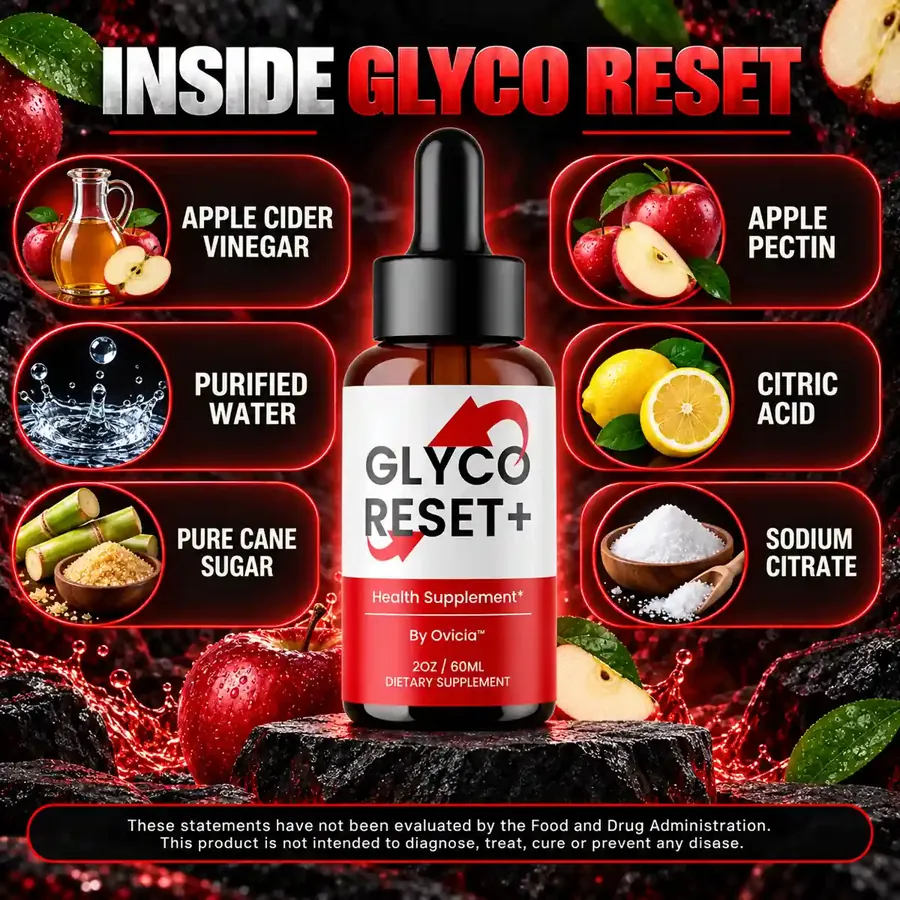
Glyco Reset lists apple cider vinegar first of six ingredients. That makes this research the main evidence anyone can point to for the drops. Our apple cider vinegar ingredient page has the short profile.
The 2025 review
What did the 2025 apple cider vinegar meta-analysis find?
It found fasting blood sugar about 22 mg/dL lower with vinegar than without. Arjmandfard and colleagues, writing in Frontiers in Nutrition in 2025, pooled 7 controlled trials with 463 adults who had type 2 diabetes (Arjmandfard 2025 ACV meta-analysis (T2D)).
The trials gave 13.75 to 30 mL of apple cider vinegar a day, roughly 1 to 2 tablespoons, for 4 to 12 weeks. The authors graded each result with GRADE, a standard system that rates how much trust the evidence deserves.
| Measure | Pooled result | Certainty (GRADE) |
|---|---|---|
| Fasting blood sugar | About 21.9 mg/dL lower (range of likely values: 14.7 to 29.2 lower) | Moderate |
| A1C | A pooled change of -1.53, with trials that disagreed sharply | Low |
| Insulin resistance (HOMA-IR) | No significant change | Not shown as a benefit |
| Dose pattern | About 1.26 mg/dL more for each extra 1 mL a day; clear only above about 10 mL a day | Dose-response model |
| Side effects | Not reported by the trials | No safety data |
Moderate certainty means the true effect is probably close to the estimate, but could differ. Low certainty means the next good trial could change the answer a lot.
In real numbers
How big is a 22 mg/dL drop in fasting blood sugar?
Noticeable, though modest. The CDC lists 80 to 130 mg/dL before meals as a typical target for adults with diabetes (CDC: Monitoring Your Blood Sugar). On average, a waking reading of 160 mg/dL would land near 138 mg/dL, still above that range (our arithmetic, not a promise).
The A1C figure needs more care. It came from few trials with very different results, which is why the authors rated it low certainty (Arjmandfard 2025 ACV meta-analysis (T2D)).
The review found no clear effect below about 10 mL of vinegar a day.
The 2007 pilot
What did the 2007 bedtime vinegar study show?
A small dip in morning readings. In a pilot study by Carol Johnston and Andrea White at Arizona State University, published in Diabetes Care, 11 adults with type 2 diabetes took 2 tablespoons of apple cider vinegar at bedtime with 1 ounce of cheese (ASU: bedtime vinegar pilot (Johnston)).
None was on insulin. Their waking glucose came in up to 6% lower. The 6% figure held in people who started above 130 mg/dL.
At a waking reading of 150 mg/dL, 6% is about 9 mg/dL. With 11 people over a short run, it was built to test an idea, not to prove one.
Expert views
What do Mayo Clinic and WebMD say about vinegar and diabetes?
Both are cautious. Mayo Clinic says studies used up to about 2 tablespoons a day for up to 12 weeks, and that apple cider vinegar is not likely to cause weight loss (Mayo Clinic: apple cider vinegar). WebMD's monograph describes the diabetes benefits as "not well defined" (WebMD: Apple cider vinegar monograph).
Short use, with care
The acid in vinegar is the worry: Mayo lists sore throats and worn enamel. With insulin or a diuretic, blood potassium could fall below normal.
Effects may be small
Changes in after-meal readings are "not likely to be meaningful for most people who have diabetes". Reflux and upset stomach are possible, and drug interactions are not fully understood.
Federal health experts agree on the main point. NCCIH warns against swapping diabetes treatment for "an unproven health product" (NCCIH: Diabetes and Dietary Supplements).
Bottle math
How does a Glyco Reset bottle compare with the vinegar doses studied?
One whole bottle holds about 2 to 4 days of the trial dose, counted as if every drop were vinegar. Each bottle is 60 mL in total, and that volume is shared by all six ingredients. At 30 mL a day it lasts 2 days; at 13.75 mL a day, about 4.
Water is the second listed ingredient, so the real vinegar share is smaller still. No Supplement Facts panel appears in the label photos we have, so the amount of vinegar per dropper serving is unknown.
| Trial pattern | Total vinegar | Bottles needed |
|---|---|---|
| 13.75 mL a day for 4 weeks | 385 mL | More than 6 |
| 30 mL a day for 4 weeks | 840 mL | 14 |
| 30 mL a day for 12 weeks | 2,520 mL | 42 |
Even a six-bottle pack, 360 mL in all, falls short of 4 weeks at the lowest trial dose. The Federal Trade Commission says study results may not apply when a product differs from the tested dose and form (FTC Health Products Compliance Guidance).
Limits
What can the vinegar research not tell you?
Quite a lot. The trials were small, short and run only in adults who already had type 2 diabetes, so the findings do not cover prediabetes or people with normal readings.
- They tested plain apple cider vinegar, not drops with added cane sugar, pectin and food acids.
- They did not report side effects, so the review cannot speak to safety (Arjmandfard 2025 ACV meta-analysis (T2D)).
- They do not show what happens when vinegar is added on top of insulin or other medicine.
- No trial of Glyco Reset itself has been published.
The drops also contain pure cane sugar, which works against the goal. Our post on added sugar in a blood sugar supplement covers that part.
If you try it
How can you try apple cider vinegar drops more safely?
Dilute every serving and keep your care team informed. Vinegar is an acid, and undiluted vinegar has damaged teeth and throats in reported cases. Our post on vinegar and your teeth explains the enamel side.
- Follow the serving on the back of your bottle, and note its grams of sugar.
- Mix the drops into a full glass of water, then swish plain water around your teeth.
- Keep insulin, metformin and every other medicine exactly as prescribed.
Shakiness, sweating, a fast heartbeat or confusion can mean blood sugar under 70 mg/dL. Take quick sugar and call your care team, as the CDC advises (CDC: Low Blood Sugar).
Bottom line
Does the vinegar research support Glyco Reset?
Not directly. The research shows a modest fasting blood sugar change from tablespoon doses of plain vinegar, over weeks, in adults with type 2 diabetes. Glyco Reset holds far less vinegar per bottle, adds sugar, and has no trial of its own. Treat it as a supplement, not a diabetes plan.
FAQ
Apple cider vinegar research: common questions
How much did apple cider vinegar change fasting blood sugar in studies?
About 22 mg/dL on average, in a 2025 meta-analysis of 7 trials with 463 adults who had type 2 diabetes. They took 13.75 to 30 mL a day for 4 to 12 weeks. The authors rated that result moderate certainty.
Is there a minimum amount of vinegar that showed an effect?
In the 2025 meta-analysis, the fasting blood sugar effect was clear only above about 10 mL of vinegar a day. The trials themselves used 13.75 to 30 mL a day, about 1 to 2 tablespoons, for 4 to 12 weeks.
Is the apple cider vinegar A1C evidence strong?
No. The 2025 meta-analysis rated its A1C result low certainty, because few trials measured it and their results disagreed sharply. Keep your A1C checks on schedule.
What does moderate certainty mean in the vinegar meta-analysis?
It means the GRADE rating gives fair trust to the result: the true fasting blood sugar effect is probably near the 22 mg/dL estimate, but it could differ. The A1C result was rated low certainty, so new trials could change it a lot.
Did the 2007 bedtime vinegar study use insulin users?
No. The Arizona State University pilot enrolled 11 adults with type 2 diabetes, none on insulin. They took 2 tablespoons of apple cider vinegar with cheese at bedtime, and waking glucose came in up to 6% lower.
Does apple cider vinegar interact with diabetes medicines?
It may, so ask your doctor or pharmacist first. Mayo Clinic warns it can irritate the throat and wear enamel, and may lower potassium with water pills or insulin. WebMD says its drug interactions are not fully understood.
Who wrote this
Written and reviewed by
Plain-language pages built from the bottle label, the order page and linked public health sources such as NIH, FDA and CDC.
Last updated . Read our editorial standards and how we check reviews. This website is run by a U.S. stocking partner for Glyco Reset, not by the manufacturer. We earn money when you buy through our order links.
Keep reading
More about Glyco Reset
Apple cider vinegar
The first named ingredient: what vinegar trials found, and why one 60 mL bottle covers 2 to 4 days of their dose.
Read more
Vinegar and your teeth
What vinegar does to tooth enamel and the throat, and six simple habits for taking acidic drops more gently.
Read moreBlood sugar guide
What prediabetes and diabetes are, the A1C test and targets, and what truly moves your numbers.
Read moreU.S. stocking partner for Glyco Reset
Ready to try Glyco Reset?
Pick 1, 3 or 6 bottles on the official order page. It shows the price, shipping and total before you pay.
- Official order page
- 60-day money-back window
- Tracked shipping